

In the rapidly evolving landscape of technology, artificial intelligence stands as one of humanity’s most ambitious endeavors. From simple calculators to sophisticated neural networks, the transformation of AI has been nothing short of remarkable. Let’s explore this fascinating journey of innovation and discovery.
The Human Drive to Create Intelligence
What compels humans to create artificial intelligence? The answer lies in our fundamental nature as innovators and problem-solvers. Throughout history, humans have consistently pushed the boundaries of what’s possible, creating tools and technologies that extend our capabilities. The development of AI represents the next frontier in this ongoing quest for innovation.
The Historical Foundation
Ancient Dreams in Ancient Cultures
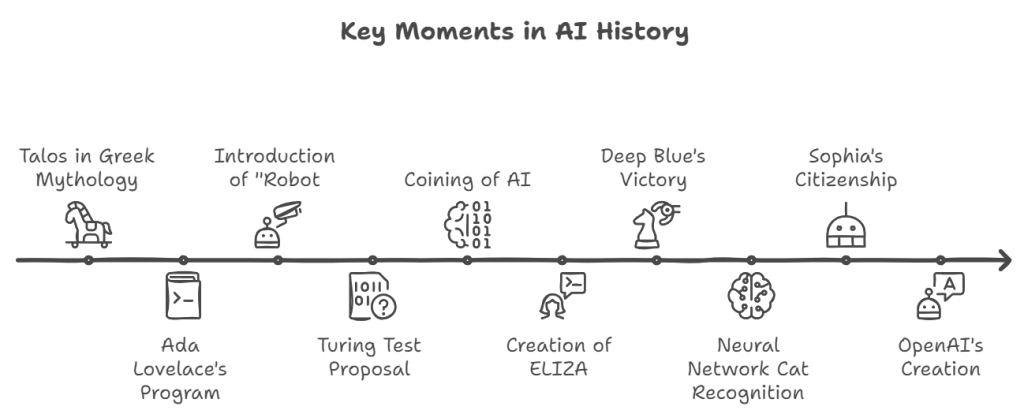
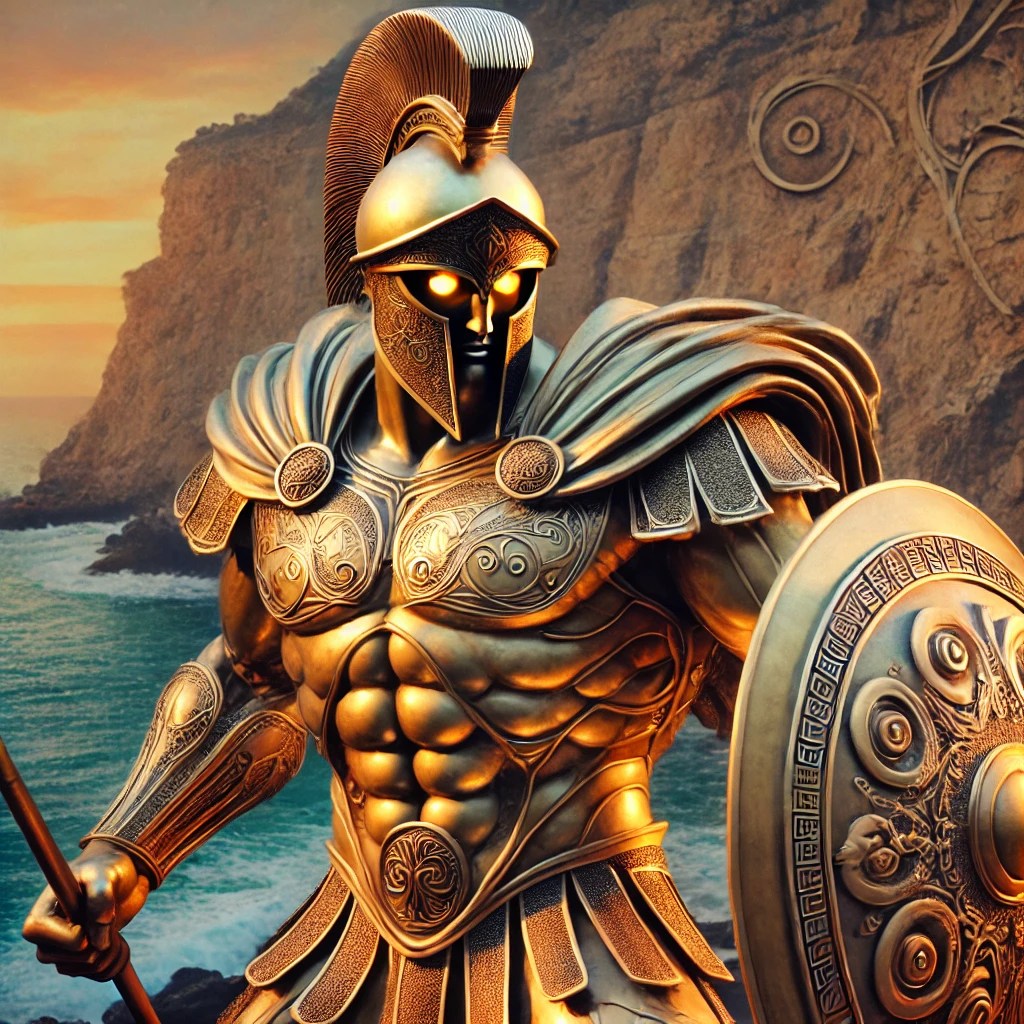
It was clear that ancient civilizations were already envisioning artificial beings. In Greece, the figure of Talos, a mechanical protector of the island of Crete, was popular. Similar stories are prevalent in other cultures as well. These stories reveal a deep-rooted human interest in creating artificial life.
The First Sparks of Modern AI
First Computer Programmer
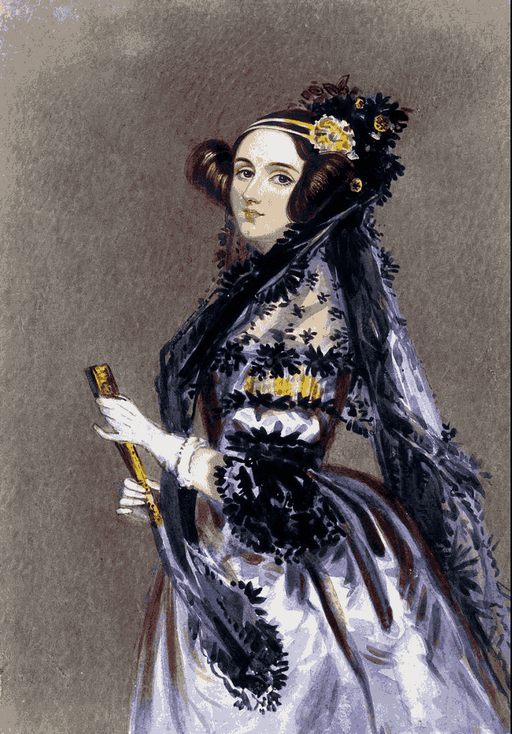
Ada Lovelace’s groundbreaking work on the analytical engine marked a crucial turning point in the 19th century. Her contributions as the world’s first computer programmer laid the foundation for modern computing and artificial intelligence. Her legacy continues to influence contemporary programming, with a computer language bearing her name.
The Birth of the Word “Robot”
Czech playwright Karel Čapek introduced the word “Robot” in one of his plays. People were fascinated by the concept, and the word quickly became part of our vocabulary, sparking dreams of mechanical helpers.
Can Machines Think?
In the 1950s, Alan Turning, the pioneering mathematician and a computer scientist, wondered about the possibility of machines “thinking”. He proposed the Turing Test, which has long questioned whether a machine can successfully mimic human dialogue. These days, AI chatbots often challenge this notion-at times melting the distinction between man and machine.
The Birth of Artificial Intelligence
The phrase “artificial intelligence” was first used officially in the mid-1950s, when John McCarthy introduced it as a scientific field at the Dartmouth Conference.
Game-Changing Early AI
In the 1960s, the first true chatbot, ELIZA, appeared, showcasing early breakthroughs in natural language processing.
In 1997, Garry Kasparov the world chess champion, lost to IBM’s computer Deep Blue. This landmark event marked the beginning of a new era for AI.
In 2012 researchers at Google trained a neural network to recognize images of a cat without any labeled data. It figured the rest out on its own. This might sound trivial, but it represented a major step in machine learning, demonstrating that AI could learn to detect complex patterns without explicit programming.
AI Today: Smarter Than Ever
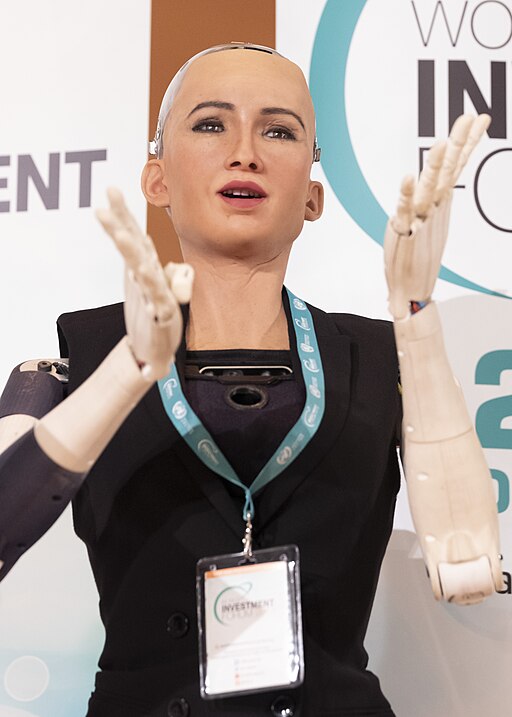
AI has advanced significantly from simple tasks. Sophia, a humanoid robot became the first robot citizen.
Looking to the Future
Artificial intelligence continues to evolve at an unprecedented pace. It will impact every field of our daily lives, be it healthcare, finance, personal care, education, agriculture, construction, etc. But the real impact will occur with AGI—Artificial General Intelligence. Experts say it is nowhere near. While the idea of robots possessing consciousness may be unsettling, it could potentially represent a significant advancement for humanity.
Conclusion
The history of artificial intelligence reflects humanity’s enduring quest for innovation and understanding. As we advance in this field, each development adds a new chapter to this remarkable story of human ingenuity. The future of AI holds immense promise, and its continued evolution will reshape our understanding of intelligence itself.
For more insights into artificial intelligence and technology, subscribe to our monthly newsletter covering the latest developments in AI research and applications.


 The Ai Ship

.jpg)
Leave a comment